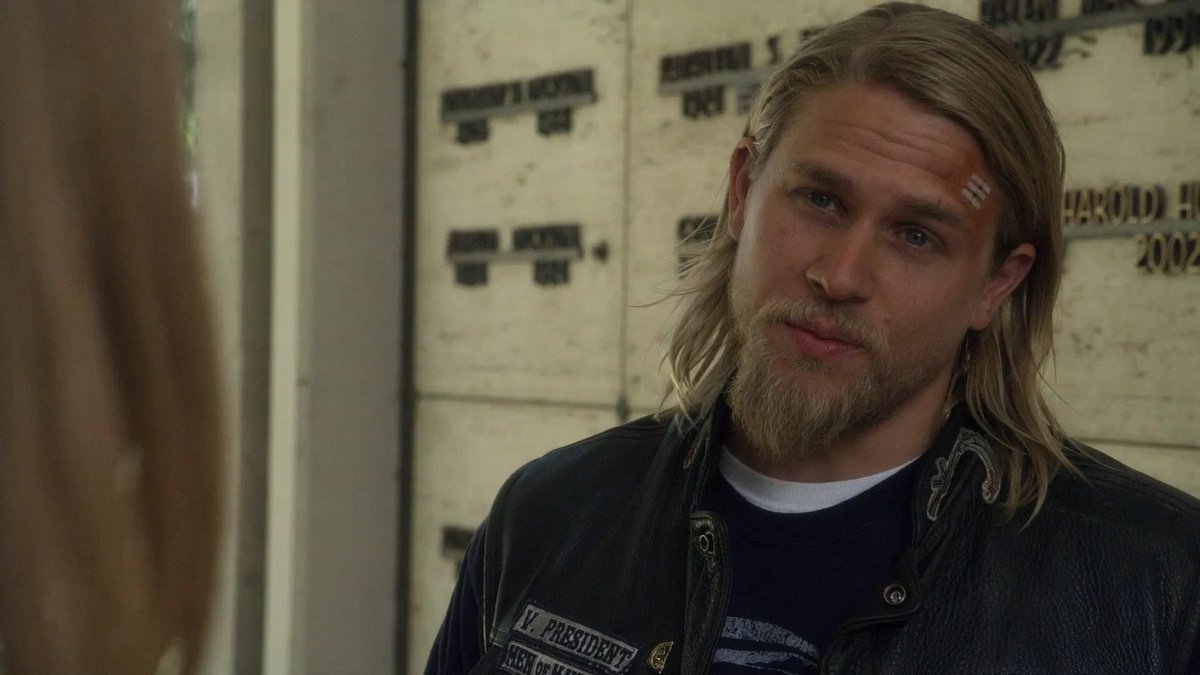
When you dive into the gritty world of Sons of Anarchy, it’s never just about the leather, the bikes, or the brotherhood. It’s a labyrinth of loyalty, betrayal, and intricate storytelling that leaves fans dissecting every scene. Particularly, Sons of Anarchy Season 3 theories, analysis, and fan discussions have long been a hotbed of speculation, uncovering hidden meanings and connecting the dots in ways even the showrunners might not have intended. From character fates to shared universes, the community's insights are as rich and complex as Charming itself.
Season 3, with its harrowing trip to Belfast and the escalating stakes for Jax and the club, left many questions simmering. The raw emotions, the brutal consequences, and the ever-present shadow of JT's legacy fuelled a vibrant ecosystem of fan theories that continue to fascinate years later. This isn't just about what happened on screen, but what could have been, what it all meant, and the deeper layers woven into Kurt Sutter's acclaimed drama.
At a Glance: Key Fan Theories & Our Take
- Wendy as Adriana La Cerva: A fun, meta-theory connecting actresses Drea de Matteo's roles. More of an Easter egg nod than a serious plot point.
- JT's True Demise: Did he crash or sacrifice himself? A poignant theory that aligns with the show's cyclical themes of sacrifice.
- Sons of Anarchy in a Shared Universe: Linking SoA to The Shield, Breaking Bad, and more. A fascinating concept given Kurt Sutter's involvement in The Shield.
- Abel as JT's Reincarnation: A compelling, almost spiritual interpretation of Jax's son's destiny.
- Gemma Embodies Anarchy: A symbolic theory that perfectly captures Gemma's chaotic influence.
- Ethan Zobelle's Plane Crash: Wishful thinking for villain justice, though Sutter implies reality is messier.
- Jax's Plan for His Kids: A heartwarming, plausible theory that suggests Jax actively protected his sons from the MC life.
- Milo (Truck Driver) is Vic Mackey: A fan service dream from The Shield faithful, though purely speculative.
- Is Jax Really JT's Son?: A dark, dramatic theory that recontextualizes much of Jax's internal struggle.
- Jarry on SAMCRO's Payroll: A practical, logical extension of the club's long-standing need for law enforcement allies.
Diving Deep: Unpacking the Most Compelling Sons of Anarchy Theories
Let's pull back the curtain on some of the most discussed and debated theories stemming from (or deeply impacted by) the events of Sons of Anarchy Season 3 and beyond. These aren't just idle thoughts; they’re a testament to the show's lasting impact and the intricate storytelling that begs for re-watches and close analysis. For those looking to Explore Sons of Anarchy Season 3 in more detail, understanding these discussions adds another layer to the experience.
Theory 1: Wendy Case is Adriana La Cerva from The Sopranos
This is perhaps one of the most delightfully meta fan theories out there, born from a clever casting choice. Drea de Matteo, a familiar face to prestige drama fans, played Adriana La Cerva in The Sopranos and later Wendy Case in Sons of Anarchy. Both characters share more than just an actress; they sport distinct New Jersey accents and grapple with severe drug addiction.
The theory posits that since Adriana's ultimate fate in The Sopranos was left somewhat ambiguous on screen (though heavily implied she was murdered by Silvio Dante), Wendy could be Adriana living under a new identity, having escaped her mob ties. It's a fun thought experiment, connecting two iconic shows through a shared performance.
Analysis: While charming, this theory is almost certainly a nod rather than a serious plot point. Kurt Sutter is known for his Easter eggs and interconnected creative universe, particularly with The Shield. Having de Matteo in both roles likely served as a wink to fans and a recognition of her talent, rather than a hidden narrative bridge. The characters' backstories and personalities, while having superficial similarities (addiction, New Jersey accent), diverge significantly in their specific journeys and motivations. It's a testament to de Matteo's acting that she can embody distinct characters while carrying recognizable traits.
Theory 2: John "JT" Teller's Real Demise – Suicide as Sacrifice
The foundation of Sons of Anarchy's narrative is built upon the ghost of John Teller, Jax's father and the club's founder. His death, a motorcycle accident often attributed to Clay Morrow's manipulation, is a constant source of pain and motivation for Jax. However, a powerful fan theory suggests JT's death wasn't just a murder orchestrated by Clay and Gemma, but a deliberate suicide—a sacrifice to protect his family and the club from the path of violence he saw coming.
This theory draws parallels with Jax's own self-sacrificing end. Both men, trapped by the club's life, sought to break the cycle or protect those they loved from its destructive force. JT's letters, which Jax discovers, frequently lament the club's direction and his inability to steer it away from crime. His perceived helplessness could have driven him to a desperate act, believing his death would somehow cleanse the club or free his family.
Analysis: This theory resonates deeply with the show's core themes of fate, sacrifice, and the inescapable cycle of violence. If JT chose his death, it elevates him from a victim to a tragic hero, mirroring the very journey Jax would eventually take. It adds a layer of profound sadness and predestination to Jax's story, suggesting he was always destined to follow his father's footsteps, not just in leadership, but in ultimate self-sacrifice. It makes JT's ghost even more potent, a precursor to Jax's own tragic destiny.
Theory 3: The Shared Universe – Breaking Bad, Scandal, Sons Of Anarchy, The Shield, & House Of Cards
This ambitious theory attempts to link several major prestige TV dramas into a singular, sprawling universe, primarily through shared thematic elements, political intrigue, and the darker underbelly of society. The most direct and compelling link, however, exists between Sons of Anarchy and The Shield, a connection often emphasized due to Kurt Sutter's significant involvement in both shows.
Minor characters from The Shield sometimes appear in Sons of Anarchy, and the overall gritty, morally ambiguous tone feels consistent. Fans theorize that the political corruption in Scandal and House of Cards, and the criminal enterprises in Breaking Bad, could all coexist in a larger, interconnected world where powerful forces operate outside the law.
Analysis: While it's fun to imagine these shows sharing a universe, the most credible link is definitely between Sons of Anarchy and The Shield. Sutter himself has played with this idea, even featuring actors like Walton Goggins (Venus Van Damme in SoA, Shane Vendrell in The Shield) in roles that playfully hint at a connection. For the other shows, the "shared universe" aspect is more thematic or coincidental than explicitly planned. They exist in a similar narrative vein, exploring the darker aspects of human nature and society, which makes the idea appealing. However, an actual narrative cross-over or direct linkage beyond The Shield remains firmly in fan-fiction territory.
Theory 4: Abel is the Reincarnation of JT
Jax’s eldest son, Abel, holds a pivotal place in the Sons of Anarchy narrative. Born into the club life under traumatic circumstances, he becomes a symbol of hope, a potential successor, and later, a living embodiment of Jax’s ultimate desire to break the cycle of violence. The theory that Abel is the reincarnation of JT adds a layer of cosmic destiny to his character.
This theory suggests that Abel isn't just inheriting the Teller legacy, but is literally fated to repeat or, conversely, to finally escape the sins and struggles of his grandfather and father. His silent, often observant demeanor, even as a young child, has led some fans to project an older, wiser soul onto him. The recurring motif of the crow, often associated with JT, and Abel's early exposure to the club's violence fuel this spiritual interpretation.
Analysis: This theory is less about direct evidence and more about thematic resonance. Sons of Anarchy often explores cycles—of violence, loyalty, and family. The idea of Abel being a reincarnation of JT speaks to the idea that some fates are inescapable, or that a new chance is given to correct past mistakes. It imbues Abel with a profound significance, making his future choices even more critical to the entire saga's underlying message. It’s a powerful way to frame the enduring legacy of the Teller family and the deep, almost spiritual connection between its patriarchs.
Theory 5: Gemma Teller Morrow is Anarchy Personified
Gemma Teller Morrow, the matriarch of the Teller family and the queen of SAMCRO, is a force of nature. Fiercely protective, cunning, manipulative, and deeply flawed, her actions frequently ignite chaos, drive conflict, and ultimately lead to tragic consequences for almost everyone around her. The theory that Gemma is literally the personification of "anarchy" itself is a compelling symbolic interpretation.
Her name, Gemma, meaning "jewel" or "gem," stands in stark contrast to her chaotic nature. She thrives in the disorder she often creates, justifying her ruthless actions as necessary for the club or her family, even when they dismantle the very things she claims to protect. Her presence in any situation invariably leads to a breakdown of order and an escalation of violence.
Analysis: This theory is remarkably apt. Gemma doesn't just embrace anarchy; she embodies it. She rejects authority, operates on her own moral code, and consistently sows discord, disrupting any semblance of peace or stability. From her manipulations of Clay and Jax to her pivotal role in Tara's death, Gemma's actions are often the catalyst for the show's most anarchic moments. This interpretation elevates her beyond a mere character to a symbolic representation of the very concept the club professes to live by, making her an even more central figure in the show's philosophical underpinnings.
Theory 6: Ethan Zobelle Met His End in a Plane Crash
Ethan Zobelle, the ruthless leader of the Aryan Brotherhood and one of SAMCRO's most despised antagonists, seemingly escapes justice at the end of Season 2 by boarding a flight to an unknown destination. This infuriated many viewers, who craved a definitive and brutal end for the character. The theory of his death in a subsequent plane crash is a classic example of fan wish fulfillment.
It suggests that while the show didn't explicitly show his demise, the universe provided a karmic retribution for his heinous acts. It's a way for fans to imagine justice being served, even if off-screen and purely speculative.
Analysis: While many viewers would have loved to see Zobelle suffer a gruesome fate at the hands of SAMCRO, Kurt Sutter has often remarked on the messy realities of life, where sometimes, the bad guys do get away. His statement implied that not every villain receives a satisfying on-screen comeuppance. Therefore, while a plane crash provides a neat, poetic end, it's highly unlikely to be canonical. It reflects a desire for narrative closure and moral satisfaction that the show sometimes intentionally denies to emphasize its gritty realism.
Theory 7: Jax Asked Other Leaders to Shield His Kids from the MC
As Jax Teller’s journey hurtled towards its inevitable, tragic conclusion, his primary motivation shifted to protecting his sons, Abel and Thomas, from the destructive cycle he was trapped in. He made significant moves to ensure their future, including abolishing the club's unwritten racist bylaws. A poignant theory suggests Jax went further, appealing to the leaders of other motorcycle clubs to keep his children out of the MC life.
This theory posits that Jax used his dying days not only to settle scores and ensure a future for SAMCRO under Chibs, but also to leverage his final act—his sacrifice—to secure a promise from other club presidents: that Abel and Thomas would never be patched in, never pulled into the life.
Analysis: This theory aligns perfectly with Jax’s arc in the final seasons. His entire purpose becomes about breaking the cycle for his sons. It would be a profoundly selfless and strategic move for Jax to use his influence and impending death to create an unspoken "hands-off" policy for his children within the wider MC world. It adds another layer of depth to his sacrifice, making it not just about SAMCRO, but about the future of the Teller legacy outside of the club’s grasp. This is one of the more plausible and emotionally resonant fan theories.
Theory 8: The Truck Driver Milo is Vic Mackey from The Shield
In the final season of Sons of Anarchy, Michael Chiklis, famous for his iconic role as dirty cop Vic Mackey in The Shield, makes a brief cameo as a truck driver named Milo. Given the strong connections between SoA and The Shield (Kurt Sutter's involvement, shared actors, similar gritty universe), fans immediately latched onto the idea that Milo might actually be Vic Mackey, living under a new identity after the events of The Shield.
Vic Mackey, after all, ended The Shield in a soul-crushing purgatory of a desk job, ostracized from law enforcement and stripped of his power. It's not a stretch to imagine him eventually fleeing that existence and adopting a new, anonymous life, perhaps haunted by his past, much like Milo appeared.
Analysis: This is another delightful meta-theory that plays on the established connections between Sutter's works. While not explicitly confirmed, the casting choice is undoubtedly a knowing wink to fans of The Shield. It's a plausible headcanon for many, offering a sense of continued existence for a beloved, complex character. The ambiguity allows fans to imagine Mackey's post-show life, finding a quiet, solitary existence after his fall from grace. It’s a compelling idea, but purely speculative fan service rather than canonical fact.
Theory 9: Jax Might Not Be JT’s Son
For seven seasons, Jax Teller grappled with his father’s legacy, reading his manifesto, trying to live up to it, and eventually surpassing it. His entire identity is tied to being John Teller's son. However, a darker, more dramatic fan theory suggests that Jax might not actually be JT’s biological son at all.
The theory points to several intriguing elements: Jax's "daddy issues" are front and center, but he never questions his parentage. Meanwhile, his brother Thomas's birth certificate is shown, but Jax's is not. Most compellingly, Gemma and Clay's relationship started very quickly after JT's death, and perhaps even before, hinting that Clay could be Jax's true father. This would recontextualize Jax’s entire struggle against Clay, making it even more of a twisted family drama.
Analysis: This theory would be a massive, retroactive game-changer for the entire series. It would explain Clay's subtle protectiveness over Jax at times, and amplify the Oedipal struggle between them. It would also make Gemma’s character even more devious and manipulative. While there’s no direct textual evidence, the lack of Jax’s birth certificate and the rapid pairing of Gemma and Clay do provide a slim, intriguing crack in the narrative for this theory to form. It's a high-drama speculation that would truly twist the knife for Jax's character if it were true, but it feels like a bridge too far for a show that was already steeped in profound family betrayal.
Theory 10: Lieutenant Jarry Will End Up on the MC’s Payroll
Lieutenant Althea Jarry, a formidable law enforcement officer, entered the scene with a no-nonsense attitude, but eventually developed a complicated relationship with Chibs Telford. Their relationship was left somewhat ambiguous at the series' end. A practical theory suggests that with Sheriff Unser gone, Jarry would eventually step into a similar role as a paid ally of SAMCRO.
For decades, Unser served as SAMCRO's inside man, providing intelligence and protection, often turning a blind eye for a fee or out of personal loyalty. With the club needing someone on the inside of the system and Jarry's financial struggles and moral compromises having been hinted at, a future where she replaces Unser seems plausible.
Analysis: This theory holds significant weight, given SAMCRO's history and ongoing operational needs. The club always benefits from having a sympathetic or compromised law enforcement contact. Jarry, having experienced the harsh realities of law enforcement and having been drawn into the club's orbit through Chibs, presents a prime candidate. Her character was complex enough to suggest she might be swayed by the right combination of necessity, loyalty, or financial incentive. It would be a natural evolution of the club's long-standing survival strategy in Charming.
The Enduring Legacy of Fan Engagement
The sheer volume and depth of Sons of Anarchy Season 3 theories, analysis, and fan discussions stand as a testament to the show's incredible writing and character development. It’s rare for a series to inspire such continued, passionate debate years after its conclusion. These theories aren't just idle speculation; they reflect the audience's deep investment in the narrative and their desire to uncover every hidden layer.
From the meta-connections to other universes to the profound explorations of destiny and character motivations, each theory offers a new lens through which to appreciate the brilliance of Sons of Anarchy. They allow us to re-engage with the characters, ponder "what if" scenarios, and keep the world of SAMCRO alive in our collective imagination.
Whether you subscribe to the belief that Wendy is Adriana or that Jax’s final act secured his children’s freedom, the discussions surrounding these theories enrich the viewing experience. They remind us that the best stories don't just entertain; they provoke thought, spark conversation, and forge a lasting bond within a dedicated fandom.
So, the next time you decide to Explore Sons of Anarchy Season 3, take a moment to consider these fan theories. You might find yourself seeing familiar scenes in a completely new light, appreciating the nuances and possibilities that make this show an enduring masterpiece. The legacy of Sons of Anarchy isn't just in its seven seasons of television; it's in the vibrant, imaginative community that continues to dissect, debate, and celebrate its complex world.